Back to Astrophotography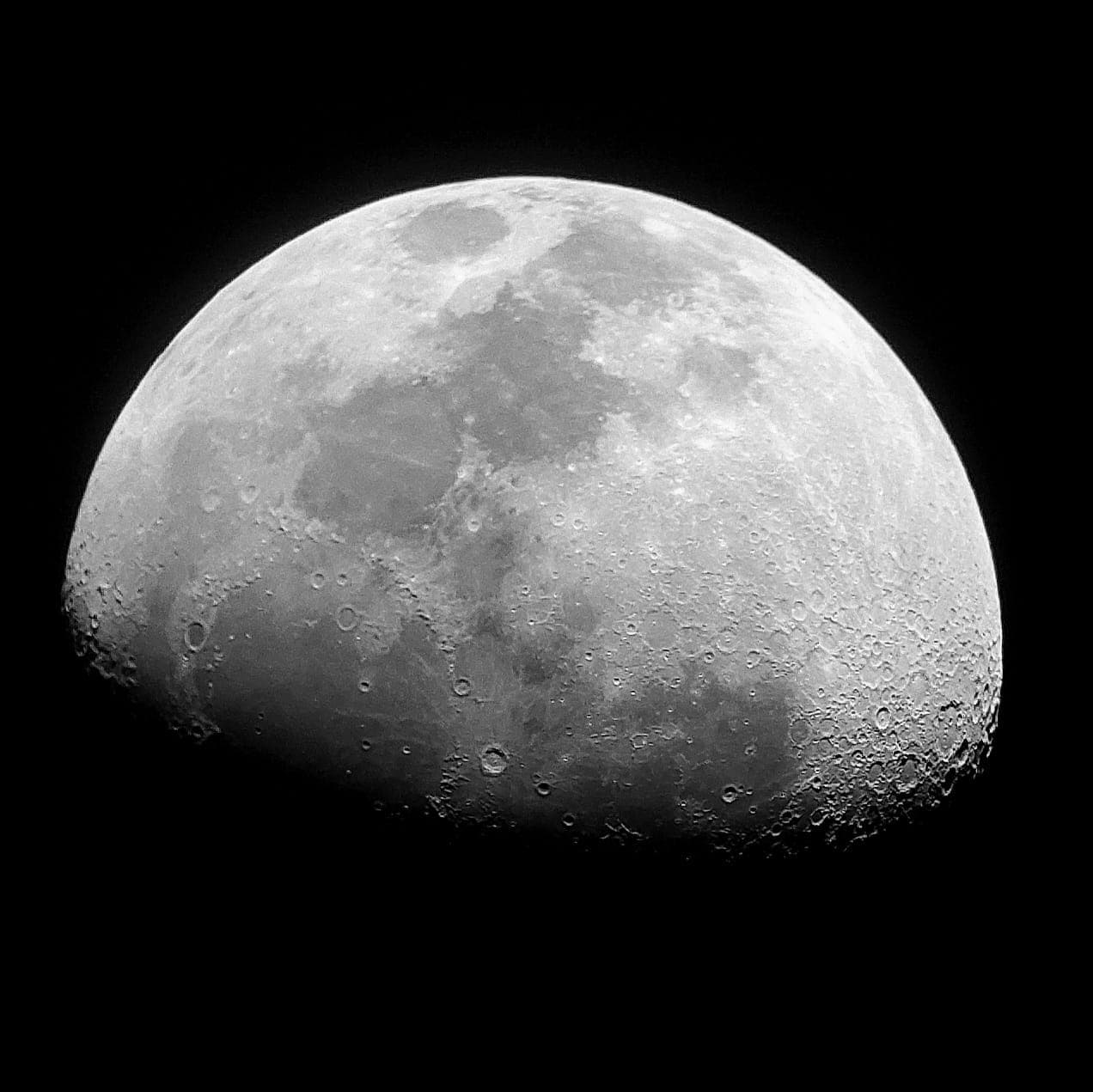
Moon - Earthshine & Craters
Target
Luna (Earth's Moon)
Date
March 10, 2024
Location
Sri Lanka
Gear
Telescope with DSLR camera
Exposure
1/250s
Integration
Single exposure
The Moon
Earth's only natural satellite, the Moon is one of the most rewarding astrophotography targets. Its proximity and brightness make it accessible even with modest equipment, yet it reveals incredible detail.
About This Image
This image captures the Moon with beautiful detail showing:
- Craters: Impact craters of various sizes across the surface
- Maria: Dark volcanic plains visible as darker regions
- Highlands: Bright, heavily cratered older terrain
- Earthshine: The faint glow on the dark portion from sunlight reflected off Earth
Imaging Details
Equipment
- Telescope with DSLR camera attachment
- No filter (natural light)
- Tripod-mounted for stability
Acquisition
- Exposure: 1/250s (fast shutter to prevent overexposure)
- ISO: Low to moderate
- Single Frame: The Moon is bright enough for single exposures
- Location: Sri Lanka
Processing
- Basic adjustments in post-processing
- Sharpening to bring out crater detail
- Slight contrast enhancement
- Color balance correction
Lunar Features
The Moon's surface tells a 4.5-billion-year story:
- Impact Craters: Preserved due to lack of atmosphere and geological activity
- Maria: Formed by ancient volcanic eruptions
- Rays: Bright streaks from relatively recent impacts
- Earthshine: Sunlight reflected from Earth illuminating the dark side
Phases and Timing
Different lunar phases reveal different details:
- Crescent/Quarter: Best for crater detail along the terminator (shadow line)
- Full Moon: Bright but flat lighting, good for overall view
- Earthshine: Best visible in crescent phases
Personal Notes
The Moon is always a favorite target - familiar yet endlessly fascinating. Each session reveals new details, and it's perfect for testing equipment and techniques. The Earthshine adds a beautiful ethereal quality to crescent phase images.